

The People Who Start Our DayAtatakai Stories: Episode 7
Four in the morning at Tokyo’s Ota Market. Watching people work with faxes and paper, I learned that what I’d thought was wrong was simply different. This is the story that gave rise to Yutoreru.
 By Jeensuk YangFor 25 years, led IT teams on Korea–China–Japan–US global projects with large companies in the Japanese and US markets, including Fujitsu, Meta and Amway. Now putting that experience to work on small businesses’ first step.
7 min read
After tossing and turning all night, I opened my eyes.
Half past two in the morning.
Ah, nearly time to get ready.
Knowing I had to leave early, I hadn’t been able to sleep soundly. I’d dozed off and woken up a few times. I hadn’t even left home, and I’d already started the morning several times over, all by myself.
At half past three, a younger colleague kindly came to pick me up at my door. Two half-asleep guys in their fifties got in the car and arrived at Tokyo’s Ota Market around four.
This was last September. I’d started a new project involving fresh produce, and thanks to a client, I had a chance to see the wholesale market before dawn.
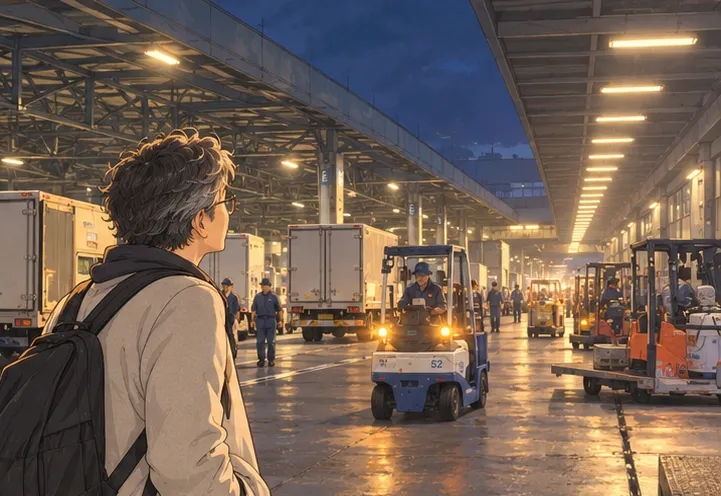
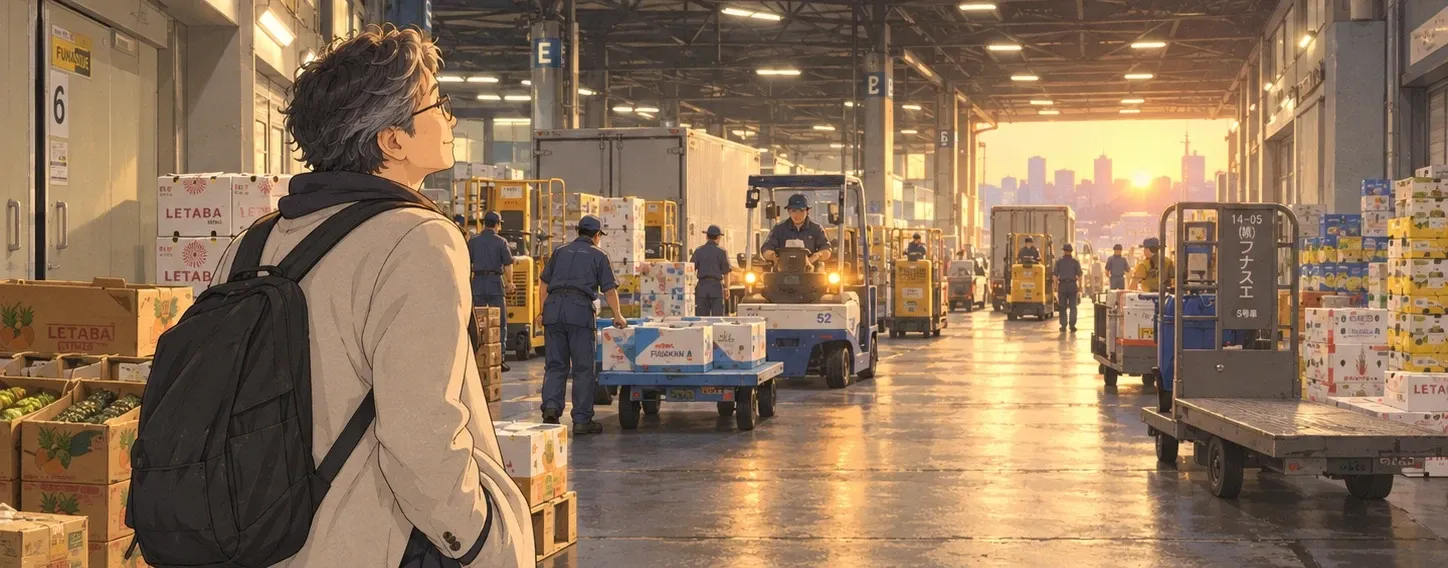
The rest of the world still seemed half asleep, but beads of sweat already dotted the foreheads of the people working at the market.
I could barely lift an eyelid. They were already lifting boxes.
Little round-fronted carts, the kind I’d only ever seen on TV, bustled back and forth. People moved, goods moved, and order slips passed from hand to hand between them.
How can I put it?
It was like looking at a painting.
Everyone was rushing about, yet there was an order to the way they moved.
The work paper does
At first, what caught my eye were the faxes and the paper. Orders came in by fax, by phone, by email, and on LINE. Someone would then write out the details by hand and pass them on to the next person.
My companion had a thought.
He was right. To someone who works with computers, it looked as though there was plenty to fix.
When I looked a little closer, though, it wasn’t quite what I’d thought.
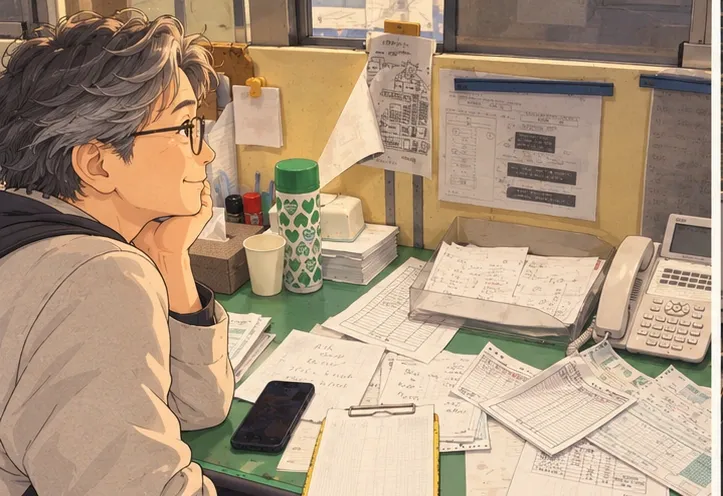
However the orders came in, they all ended up in the same form: on paper. Each slip said who needed to do what. People looked at it and got on with their jobs.
Things kept moving without people having to say much. Each person knew their part and seemed to know what the next person was waiting for.
A single sheet of paper was doing the talking for them.
It’s easy to see paper and think:
Get rid of that, and everyone’s job will be easier.
But how long have we actually watched to see what that paper does in their hands?
I heard that the shop had been in business for over a hundred years. Its way of working must have taken shape bit by bit as people did the same jobs day after day, making small adjustments along the way. Each person plays a small part, does what they’ve agreed to do, and hands the work on to someone who knows they can count on them.
To me, things seemed to run every bit as smoothly as they would with a digital system. If I rushed in to change something, I might just throw off a whole set of jobs that already fit together.
By the time we’d seen the auction and got back to the office around half past seven, the pile of order slips I’d seen earlier had been sorted out.
In all that bustle, everyone had done their part.
Not wrong, just different
I’ve lived in Japan for 24 years.
When I first came here, some things struck me as awkward or just plain wrong. The longer I’ve lived here, the more I’ve realized that some of them were things I hadn’t looked at closely enough.
I’d thought they were wrong. They were just different.
Couldn’t you sell things more cheaply if you cut out a few steps in distribution? That was the kind of efficiency I used to think about first. Here, though, I could see the people who made their living at each of those steps. I could see the promises they’d kept to each other and the trust they’d built up over years of doing business together.
When we bring in a new way of working, how do we help carry forward what these people have kept alive?
I thought I knew a thing or two about Japan. That morning at the market, I learned something more.
And I found myself thinking of someone I’d met a few months before.
A day that starts earlier and earlier
Back in March, I visited another client early one morning.
It was a quiet warehouse on the outskirts of Tokyo. It was just after six, and one employee was already hard at work at a computer.
The job was to enter, one by one, all the orders that had come in overnight through different channels.
They told me they started at dawn and kept at it all morning.
As the volume of orders grew, they had to come in earlier and earlier.
That stayed with me.
With every increase in orders, this person’s day was beginning a little deeper in the dark.
As I stood there watching them work, I thought:
Here was someone whose load I could lighten a little with what I knew. Surely a computer could take on some of that copying they had to do day after day.
What could I take off their hands?
After seeing Ota Market, I had one more question to go with that thought.
What could I take off their hands that would really make their lives easier?
I think solving a problem starts with looking at it differently. If stamping documents is hard work, the first thing to think of isn’t a machine that stamps them faster. First we need to ask why the stamp is needed at all, and whether there’s another way to give approval.
I think the same goes for the market.
The point isn’t that people use paper. It’s how many times they have to copy the same information. I need to learn from the things they already do well together and look for the effort that goes into repeating steps in between.
I still need to think more about how to go about it.
Whenever I visit a workplace, there’s always something I didn’t know.
Even so, these days I enjoy the time I spend helping clients solve their problems.
I used to love wrestling with a hard math problem. Now it’s a client’s tricky problem that brings a smile to my face.
This time, there’s a person on the other side of the problem. If I find one answer, someone’s morning could get a little easier.
Even if I don’t get it quite right at first.
I’ll find an answer.
The people who start our day
On the way back from the market that morning, I felt grateful for the sweat that goes into getting our day started.
While I was asleep, someone was taking orders, someone was carrying boxes, and each was getting ready for the day in their own way. Thanks to them, we find fresh fruit and vegetables right in our neighborhoods and barely give it a thought.
It’s a funny thing.
When someone puts in that effort day after day without fail, we come to take it for granted.
When I pick up an apple, I don’t usually stop to think about all the hands it passed through to reach me.
It was only thanks to a client that I happened to get a look inside the market before dawn.
But it was there that I saw a little more clearly why I do the work I do.
Not a break they can finally snatch once all the work is done, but a few minutes to catch their breath while the day’s work is still under way.
If I could use what I’ve learned about computers and AI to give them that time, I’d be glad.
This is the story that gave rise to our service, Yutoreru.
A service that gives our clients a moment in a busy morning to enjoy a cup of warm green tea.
That’s how Yutoreru began.
I adapted this piece from “A Busy Day-to-Day Life” (thejino.com), a post I wrote on my personal blog on March 17, 2026.
We’d like to hear your story
You could start with what a morning at work looks like for you.
Share your story