
Not a Perfect Product, but a Start We Can Build OnAtatakai Stories: Episode 3
Even Microsoft, with everything it has, keeps working on Windows. With a small team and only so much time, what should we build first? Behind the name Jinsoku Development (迅速開発) is a simple idea: build something small and learn from it quickly.
 By Jeensuk YangFor 25 years, led IT teams on Korea–China–Japan–US global projects with large companies in the Japanese and US markets, including Fujitsu, Meta and Amway. Now putting that experience to work on small businesses’ first step.
4 min read
Sometimes, when I look at Windows, a thought crosses my mind.
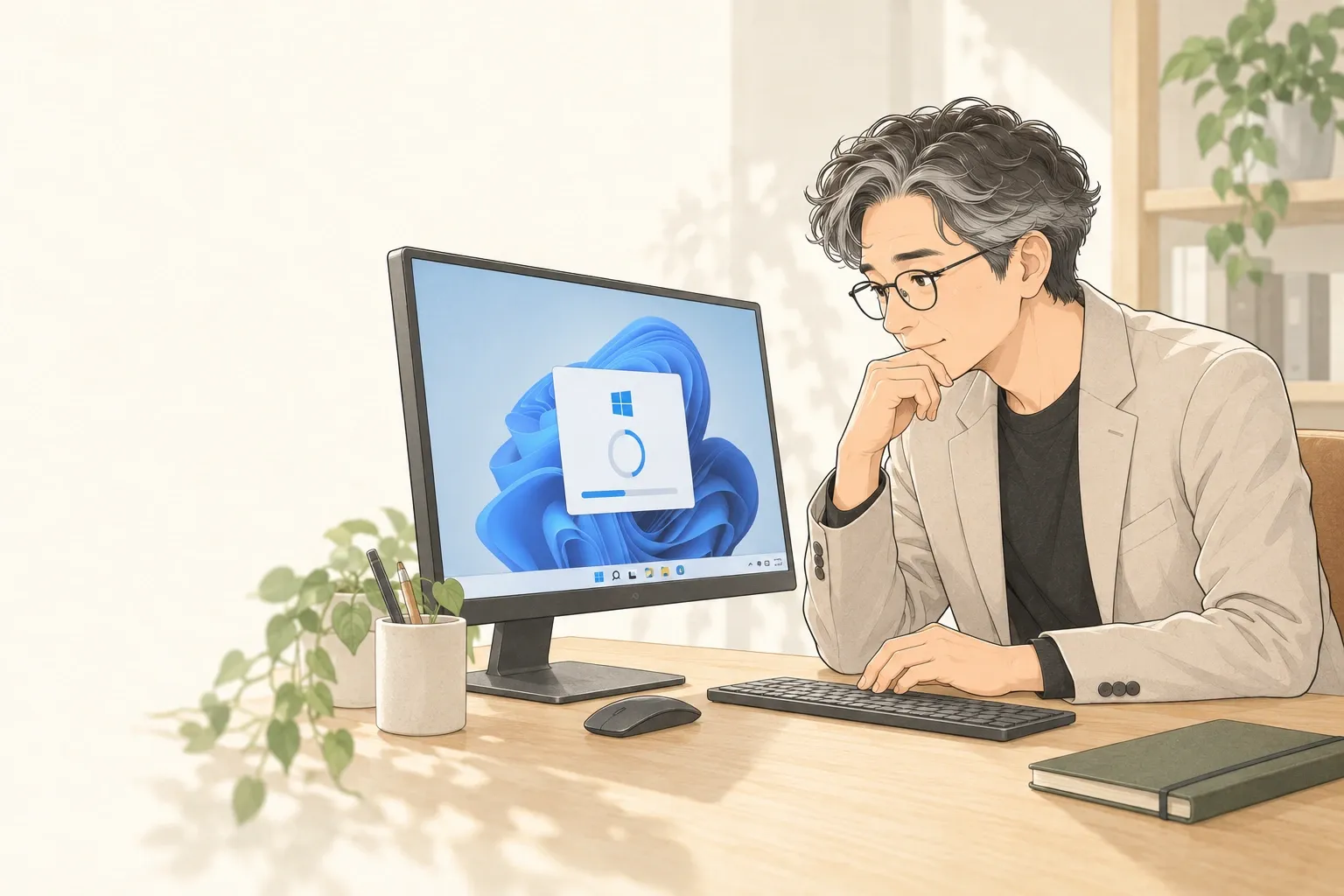
Every so often, my computer tells me it’s time for an update. Sometimes a feature changes. Sometimes it’s a fix for a security issue.
At first, I didn’t think much of it. But when I looked at it as someone who builds services, it struck me that there was something worth paying attention to.
Microsoft has the money, the people and the technology. It has just about everything we think we need.
Yet even Microsoft keeps making fixes to Windows.
So where does that leave us?
We’re a small team with only so much time and money. If we set out to build a product that does everything from day one, how long will it be before we have something to show a customer?
That’s where I think we need to look at development a little differently.
What I mean by “let’s build it and see”
I don’t mean we should throw something together and put it out there.
I mean we should use the time and money we have to build the most important part first, and build it well.
There’s no end to the features I’d like to build. It would be nice if it could do this. And wouldn’t it be handy if it had that?
I know the feeling.
But what sounds good to us isn’t always what the person using it needs.
While we’re debating whether to add another feature, a customer using what we’ve already built might be getting stuck somewhere else entirely.
It’s hard to know until someone tries it.
That’s why I think we need something we can put in front of people and talk about together.
Then I listen.
What felt easy? What got in the way? Did the thing we thought mattered most actually matter to them?

That’s when the next step starts to come into focus.
What does it mean to be done?
For me, the point of development isn’t to say, “We’re done building it.” It’s to have something up and running.
Of course the building matters. What we make has to work properly.
But building something doesn’t, by itself, make it a business. Somebody has to use it, and it has to help them do their work.
So the launch isn’t the end. If anything, it’s when we need to pay closer attention.
We watch how people use it, listen to what they tell us and make changes. Then we try those changes out and learn some more.
That’s what came to mind as I looked at how Windows has changed over the years.
Why I call it Jinsoku Development (迅速開発)
My name is Jeensuk.
In Japanese, 迅速 means “quick” and is pronounced jinsoku (じんそく). It sounds a lot like my name.
So the name Jinsoku Development carries an echo of my own name as well as the idea of developing quickly.
But by “quickly,” I don’t just mean writing code faster.
I mean building something small, trying it out soon and learning from it right away.

If it doesn’t work the way we imagined, we can change it while it’s still small. If part of it helps, we can build on that.
If we build something big and only then realize we’ve gone in the wrong direction, the time and money we’ve already put into it can make us hesitate to change it, even when we want to.
I’d like to ease that burden a little.
I hope we won’t ask the first version to prove everything.
Let’s start by finding out whether the one thing that matters most actually helps. Then let’s think together about what comes next.
That’s the kind of start I’d like to make with you.
It’s all right if it doesn’t do everything at first.
What I hope we’ll keep sight of, together, is what we’re learning and what we want to change.
We’d like to hear your story
You could start with what a morning at work looks like for you.
Share your story