
The People Left BehindAtatakai Stories: Episode 1
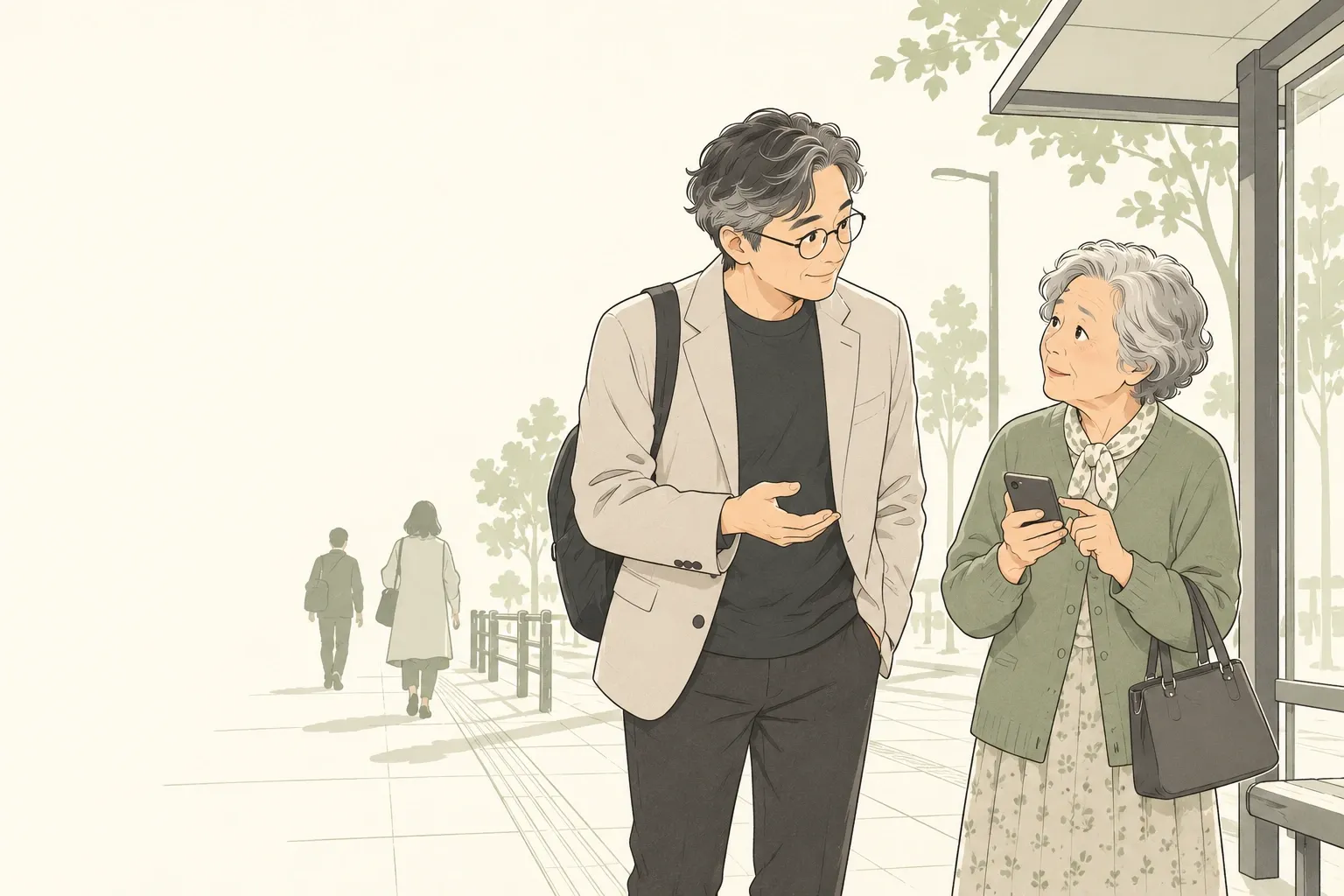
While I waited my turn at a Docomo shop, I overheard an older woman talking to a member of staff. I’d gone in for a new phone. I came away thinking about the people my work in technology is meant to help.
 By Jeensuk YangFor 25 years, led IT teams on Korea–China–Japan–US global projects with large companies in the Japanese and US markets, including Fujitsu, Meta and Amway. Now putting that experience to work on small businesses’ first step.
4 min read
A conversation in the next seat
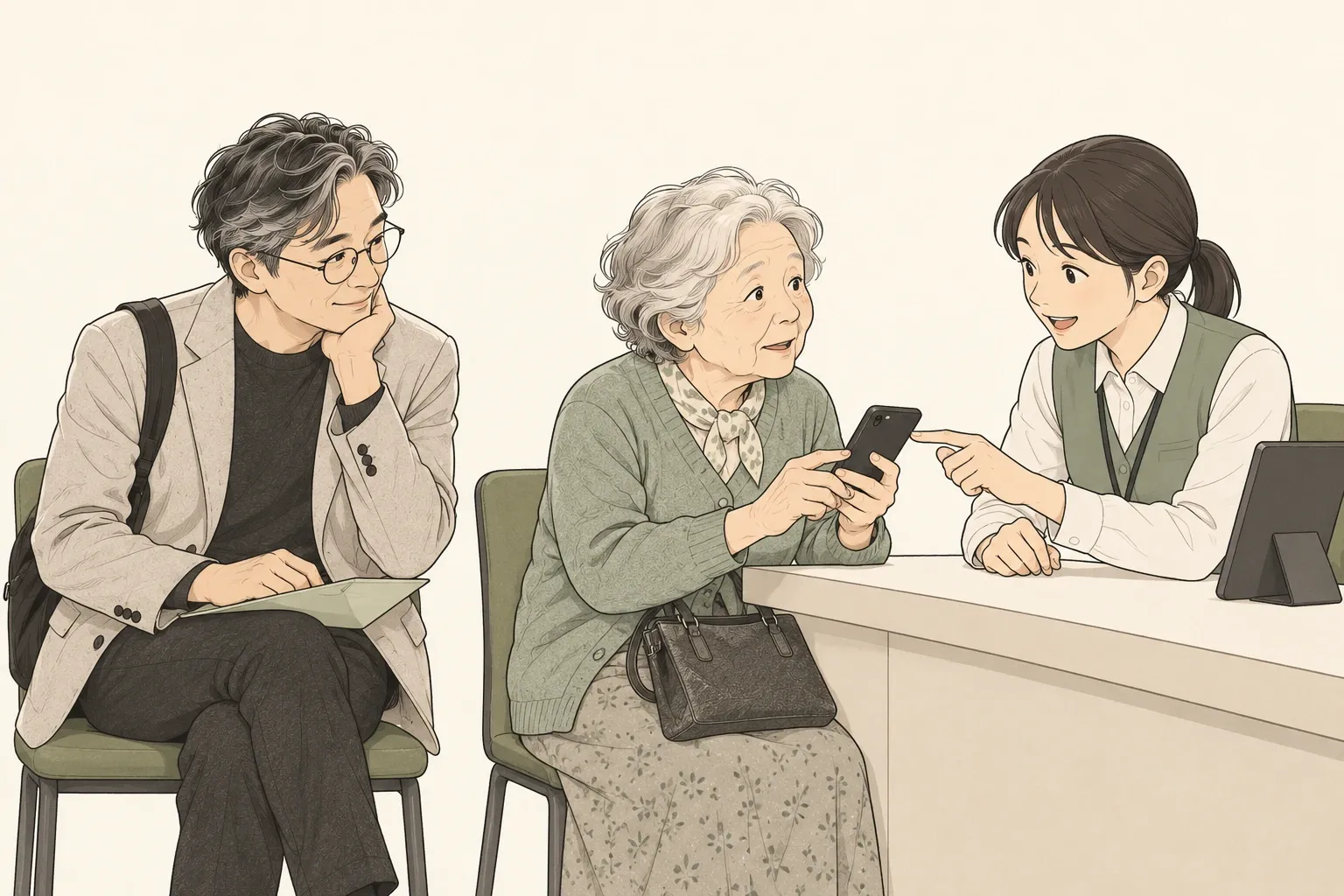
I stopped by a Docomo shop to trade in my phone for a new one. While I waited my turn, I could hear an older woman talking to a member of staff in the next seat.
When I first wrote our encounter down in Korean, I gave her a Jeolla accent. Of course, this woman in Japan hadn’t been speaking in a Korean dialect. But whenever I try to put an older Japanese person’s words into Korean, a dialect is what comes to me first. Somehow it sounds closer to the voice I remember.
She’d come to the shop because she’d heard she could get ¥20,000 worth of points by registering her My Number Card. To register, she needed her smartphone. And to get started on the phone, she needed to know her own number.
It’s Japan’s national ID card, similar to a resident registration card in Korea. Foreign residents of Japan can apply for one too. The cards were introduced in 2016, but by early 2023, when I wrote this, only about half the population had one. To encourage people to get a card and register it, the government was offering up to ¥20,000 in points through its MyNa Points program.
She carried that phone every day. Finding her way around inside it was another matter.
I sat beside her, listening as I waited for my turn.
What I do for a living
These days I’m building a business around what people call digital transformation, or DX.
Put simply, I help businesses find ways to reach their customers through digital tools.
It used to be that if you wanted a restaurant meal, you went to the restaurant. Now you open a delivery app, and the restaurant comes to you. We used to raise a hand in the street to hail a taxi. Now we move a finger across a screen.
We still eat meals and ride in taxis. It’s the way we get there that’s changed.
I think those changes will come faster as AI and robotics advance. My job is to help companies prepare for them.
I’ve made my living in IT for about 25 years. I know how much work digital tools can save us. I also think this shift matters, and that it isn’t going away.
Still, something about that conversation in the next seat nagged at me.
Convenient for whom?
When we say something is more convenient, who do we have in mind?
Calling a taxi is simple now. Open the app, enter your destination, tap the button. If you’re explaining it, that’s three short steps.
But if your first question is “How do I open the app?”, how far is it from there to that last tap?
Sometimes I worry we’re designing all this convenience with only the young in mind.
Most people being able to use something isn’t the same as everyone being able to use it. We can shrug and say it’s the way of the world. Someone still gets left behind.
What worries me most is what happens when healthcare goes digital.
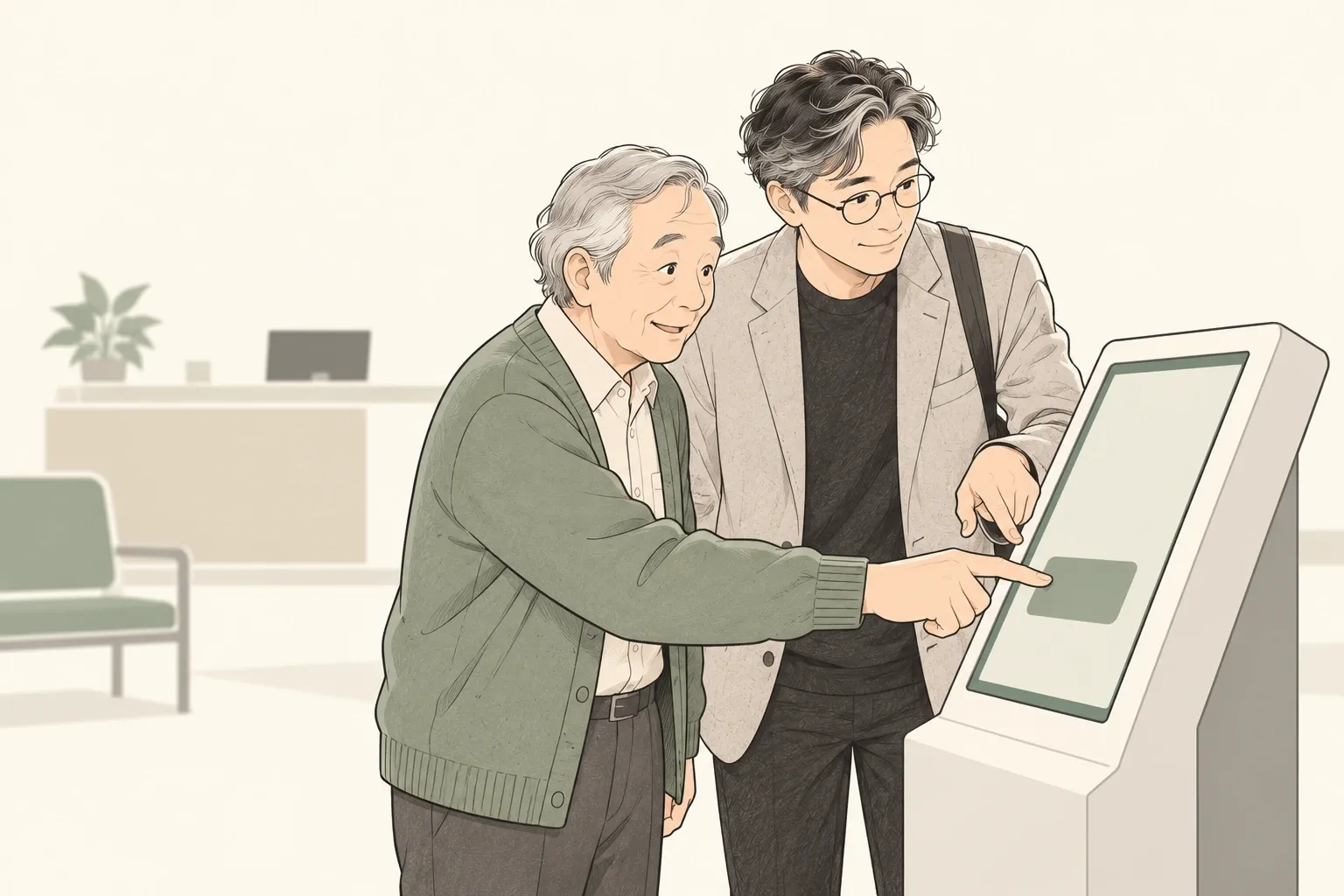
Many people who come to a hospital are older. Others feel so unwell that even things they do every day take an effort. On a day like that, small print on a screen or a button you’ve never seen before can be one more thing you’re not up to.
There’s something sad about going to a hospital because you’re ill and finding you’re also expected to know how to work a machine.
The people left behind
There probably isn’t a business model that works for everyone.
Even so, I’d like there to be room for someone to say, “Here, let me help.” Room to explain something a second time when the person you’ve just shown asks again.
I’d like to see more businesses make room for the people who might otherwise be left behind.
There’s only so much I can do myself.
It matters what kind of world we build for our children. It matters just as much that our parents have places where they can feel at ease and smile.
Somewhere you can ask about something new without embarrassment, and wait your turn without worrying that you’re a little slow.
I think that’s close to the kind of digital transformation I’d like to be part of.
I went out to replace my phone and came home thinking again about the work I want to do.
One more thing learned before the day was out.
Adapted from “The People Left Behind” on my personal blog, originally published February 28, 2023.
We’d like to hear your story
You could start with what a morning at work looks like for you.
Share your story